Product types
Different products triggered different checkout rules and edge cases.
Selected Work · Commerce
How better execution turned a checkout redesign into measurable growth
Reduced checkout time by roughly 30%, delivered in 12 weeks, and contributed to an estimated ~$16M in annualized revenue impact through a post-launch A/B test.
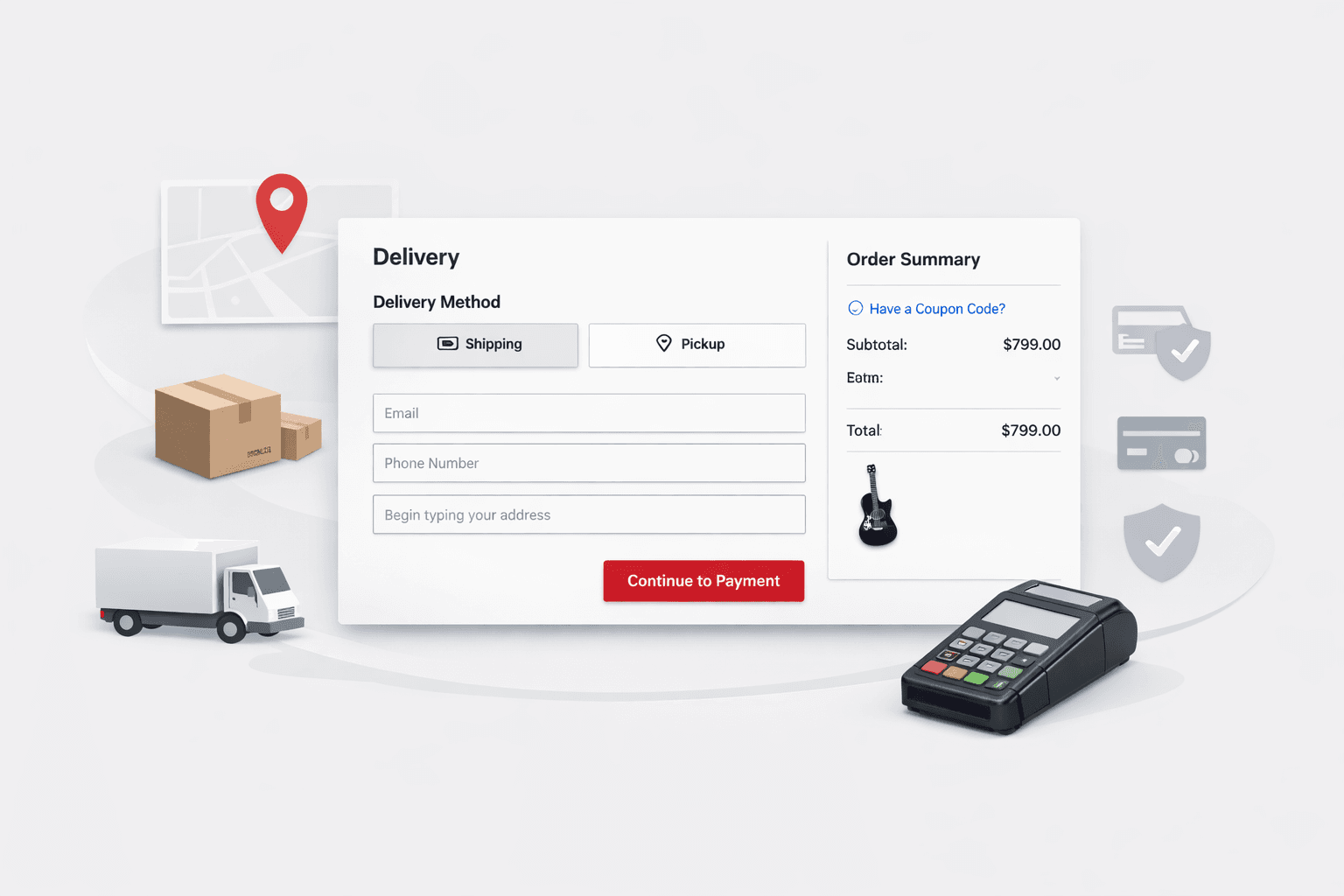
The case in one sentence
This was more than a redesign story. It was a product leadership story about improving how the team executed: giving developers enough context to make strong decisions, keeping UX involved during development, and delivering a high-stakes launch with almost no service disruption.
The stakes
Why delivery mattered as much as the interface
Checkout was one of the highest-stakes parts of the customer journey. Improving it had meaningful upside, but any issues at launch could immediately affect customers, revenue, and operations.
The challenge was not just to redesign the flow. It was to deliver a significantly better experience quickly and safely, while making sure the team could navigate real implementation constraints without degrading the outcome.
Supporting artifact
Checkout behavior changed based on product types, delivery options, sale conditions, payment methods, saved information, customer state, and more. The redesign had to simplify the experience without breaking the flexibility required for real customer journeys.
Product types
Different products triggered different checkout rules and edge cases.
Delivery type
Fulfillment choice changed what fields, steps, and options appeared.
Sale types
Promotions and sale conditions changed how the journey behaved.
Stocking status
Availability changed what combinations were valid in the flow.
Guest or signed in
Customer state changed saved information, defaults, and friction.
Payment options
Tender choice affected validation, sequencing, and fallbacks.
Saved payments
Stored payment methods changed the interaction path mid-flow.
Saved addresses
Known addresses changed what users needed to enter or confirm.
Location
Geography influenced availability, taxes, and eligible paths.
Quantity
Cart quantity could change what combinations were allowed.
Cart and product state
Fulfillment and location
Customer state
Payment state
My role
I helped drive the effort across product, UX, and engineering from problem definition through rollout. That included aligning the team around the stakes of the redesign, shaping the work clearly enough that people could make good decisions during execution, and improving how collaboration happened during the build.
Developers had enough context to make stronger product decisions during implementation.
UX stayed actively involved during development instead of handing off designs and stepping away.
That improved decision quality throughout the project.
The operating model
One of the biggest lessons from this work was that developers build better when they are given enough context to think, not just enough detail to comply.
Previously, design was treated more like a handoff. On this project, I made sure the UX designer remained available throughout development. That meant that when feasibility issues came up, they turned into live product and design conversations rather than isolated engineering compromises.
That mattered because the designer did not just have one solution in mind. He had multiple directions he could take. So instead of drifting into a weaker fallback path, the team could quickly choose another option that was still intentional, still user-centered, and more feasible to build.
That reduced rework, improved implementation decisions, and helped the team move faster with more confidence.
Artifact
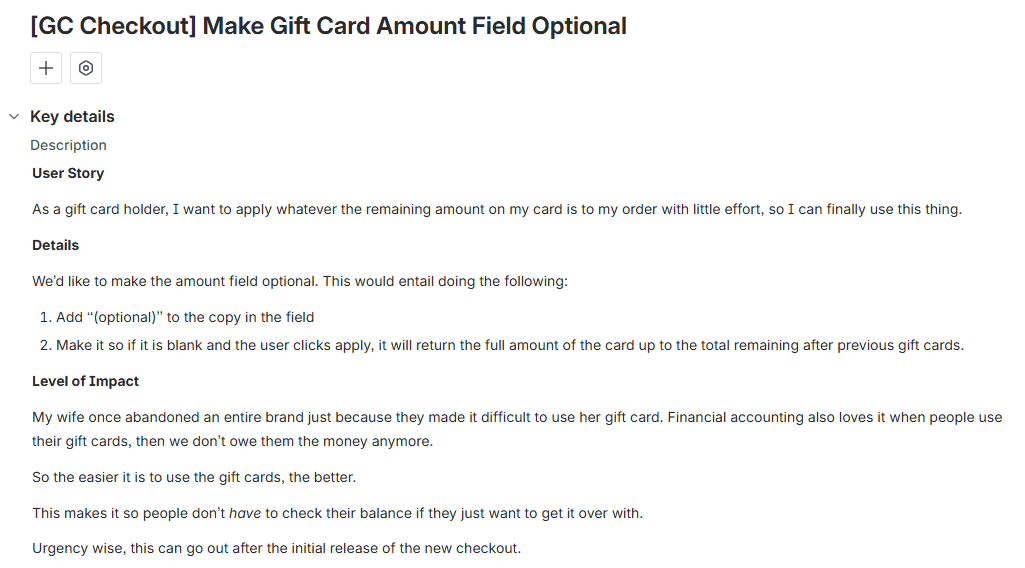
A representative story showing how I framed user need, expected behavior, and business rationale so engineering could make stronger in-flight decisions.
Artifact
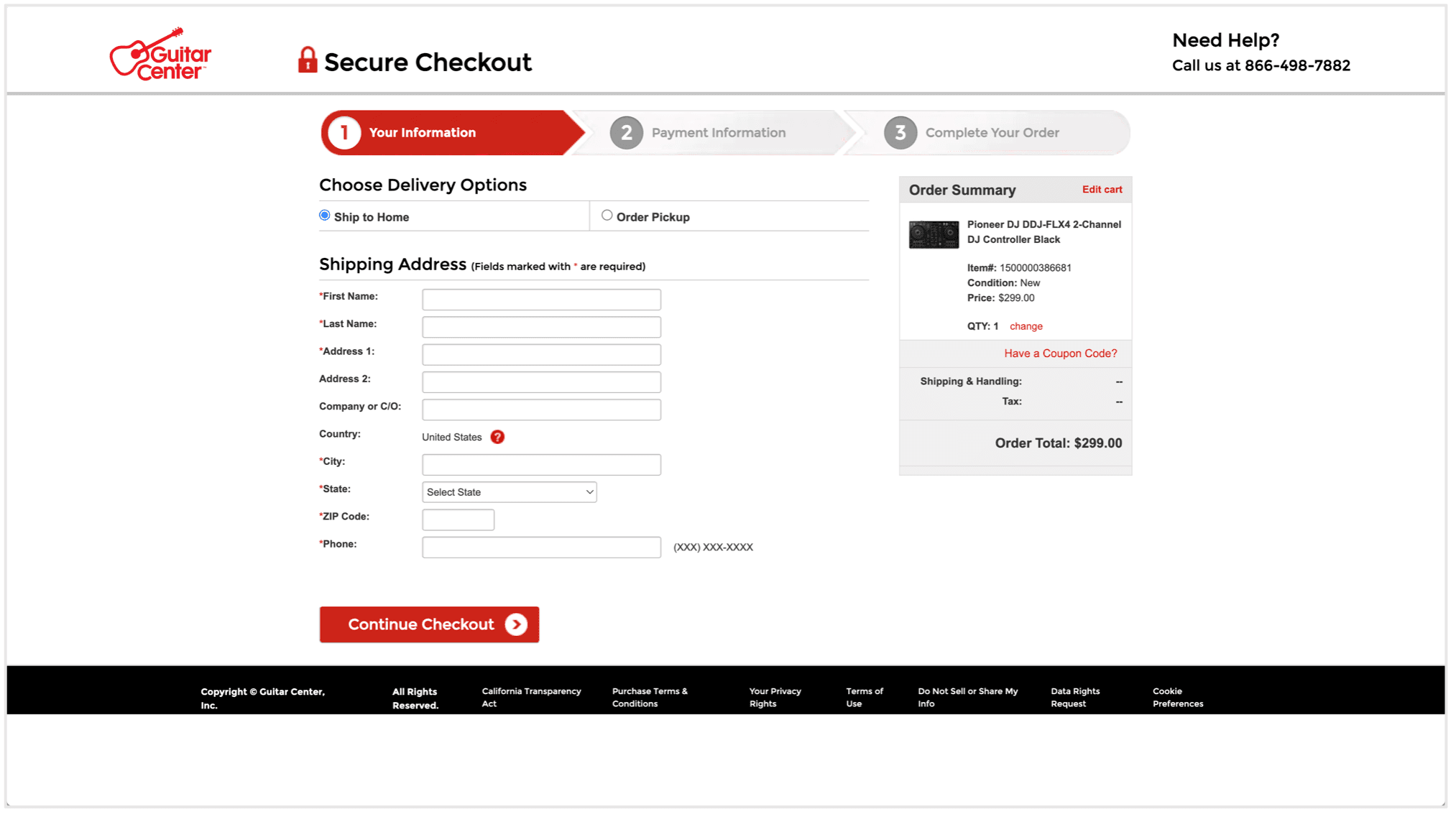
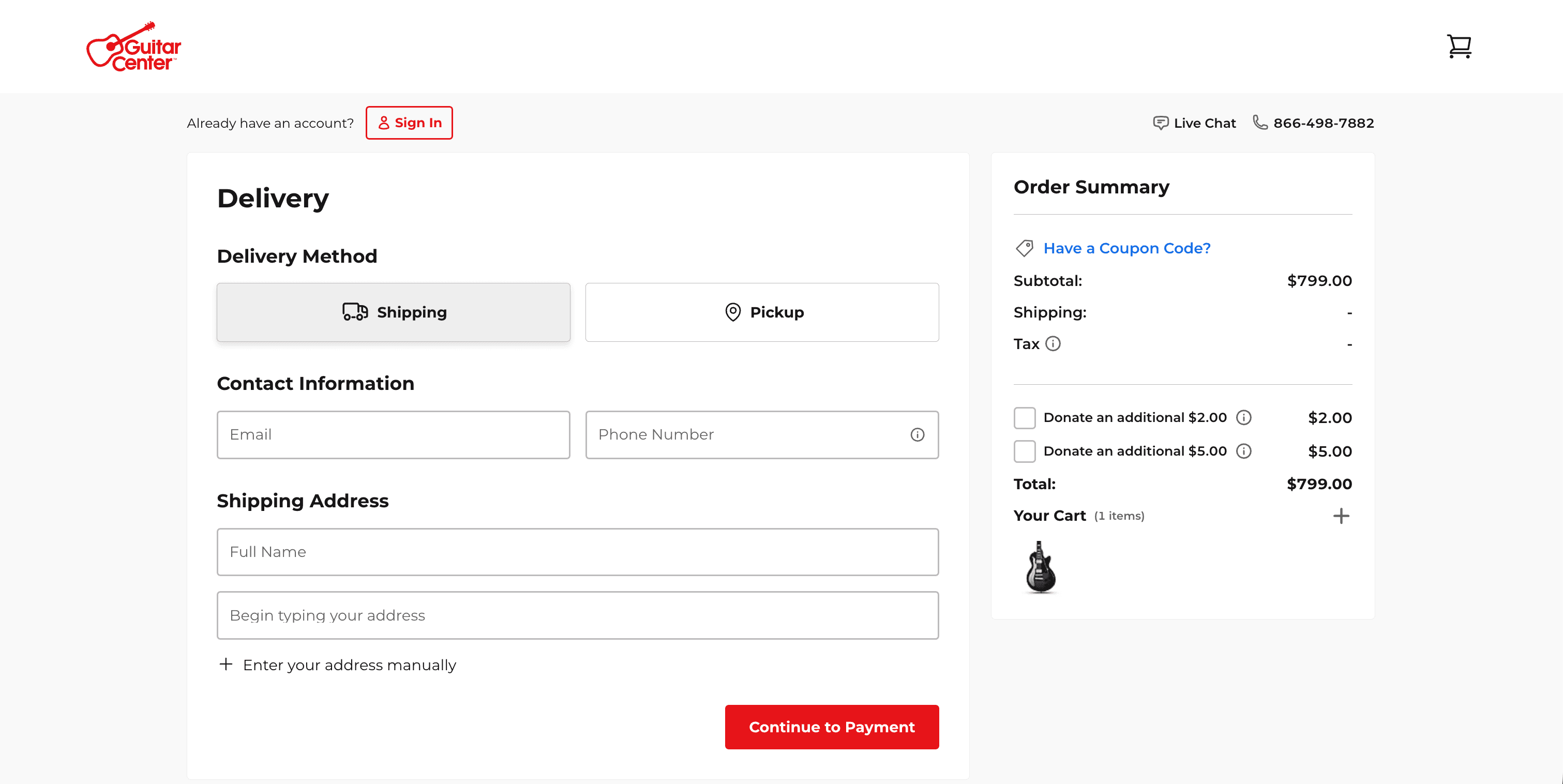
The redesign simplified a dense multi-step checkout into a clearer, easier-to-scan flow.
Delivery
We delivered the redesign in 12 weeks, which was fast for a journey this sensitive.
More importantly, the launch was unusually clean. We saw almost no interruption to services after release, even though checkout was a high-risk area where problems would have shown up immediately.
Part of that came from turning extreme scenario complexity into a practical QA plan. I mapped roughly 400 billion theoretical checkout combinations, then focused the team on 20-30 scenarios that covered the highest-risk paths before launch.
That outcome came from the execution model as much as the redesign itself: stronger shared context, tighter UX-engineering collaboration, and better in-flight decisions.
Follow-up usability testing validated the redesigned experience across real checkout tasks.
Key takeaway
The redesign improved perceived usability across every featured task, eliminated failure on discount-code entry, and reduced full checkout time from 3:00 to 2:03.
After launch
The measurable outcomes stayed grounded in observed speed, validated conversion lift, and a clean delivery outcome.
The annualized upside estimate came from the post-launch A/B test, which gave us a grounded way to measure business impact rather than relying on assumptions.
Key recommendations
Two partner perspectives that reinforce the same story: stronger execution quality during build led to a better outcome.
Kept UX, engineering, and business aligned through a massive React redesign — shipped before peak holiday.
Christopher worked with Daniel on the same team
Christopher Pruneau
Senior Software Engineer at Guitar Center | Next.js, React, TypeScript | Analytics & MarTech Specialist
August 20, 2025
Transformative thinker who improves both the product and the process behind it.
Matt worked with Daniel on the same team
Matt Winick
Senior UX/Product Designer ▪︎ Design Systems ▪︎ eCommerce ▪︎ Research-Driven Product Strategy
August 25, 2025
Reflection
This project reinforced a product principle I still carry forward: better outcomes do not come from trying to control every decision.
They come from creating enough shared context that the right people can make strong decisions at the right moment.
In this case, that led to a better customer experience, a smoother launch, and measurable growth.
Explore all case studies