01
Order lookup inside ChatGPT
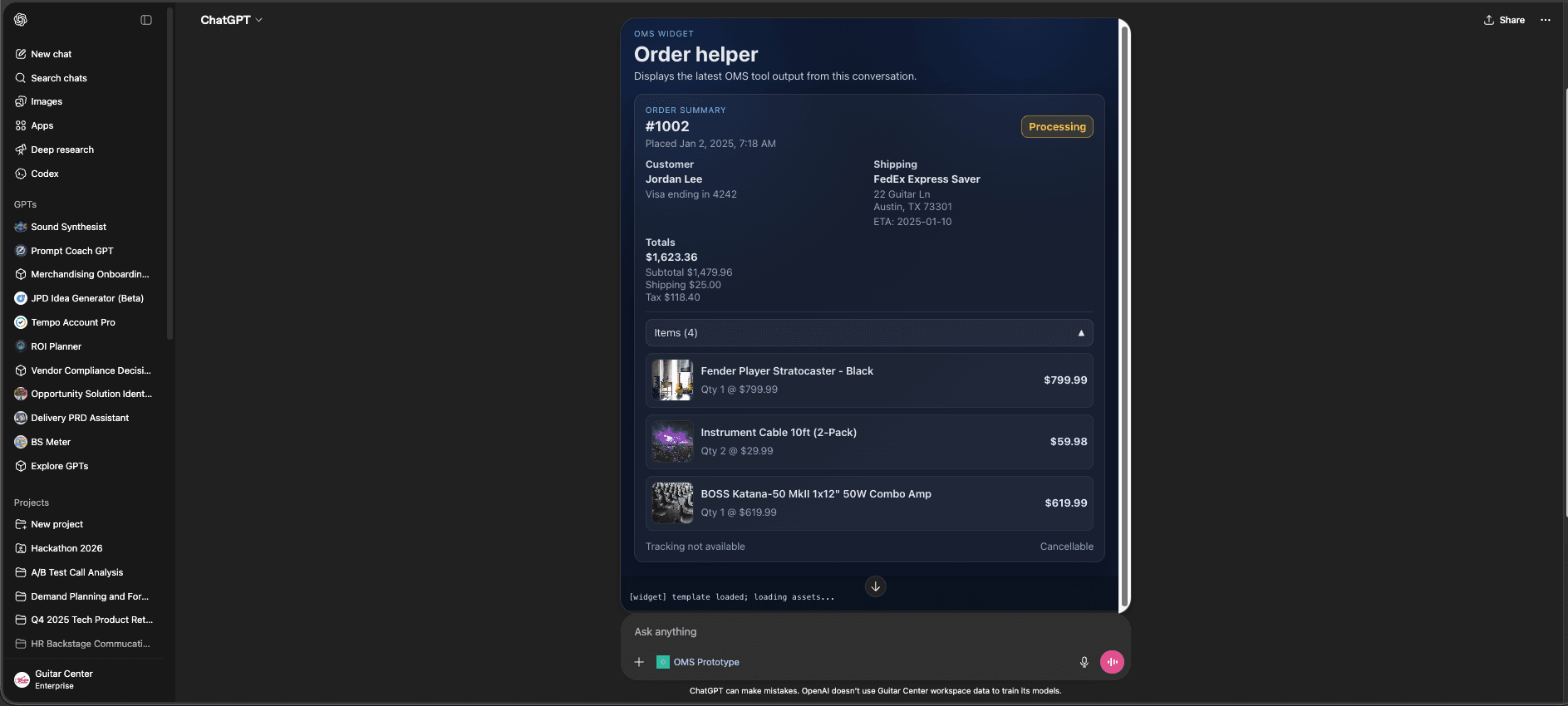
Natural-language lookup returns a structured order view with status, shipping details, totals, and expandable items.
A prototype ChatGPT App that enables users to interact with Order Management Systems through a conversational interface, handling workflows like order lookup and cancellation with built-in guardrails.
Designed to explore how AI agents can safely operate within enterprise workflows.
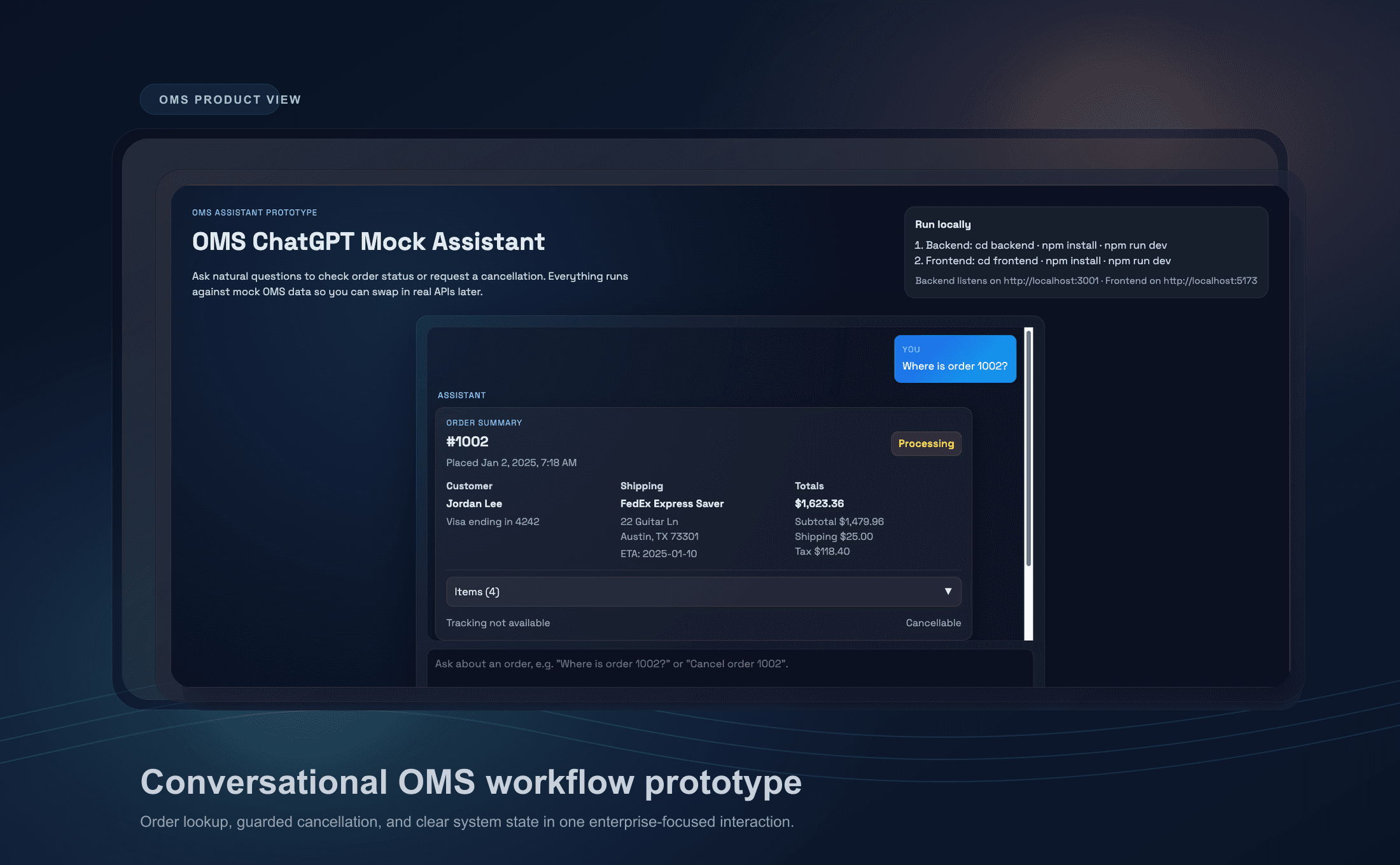
The prototype uses mock order data so the workflow can be explored without exposing PII.
Focused on two concrete OMS jobs where guardrails and user confirmation matter.
Reasoning, confirmation, and clear user control were treated as first-class product requirements.
Product overview
A conversational AI interface for Order Management workflows, designed to make common support and operations tasks faster, clearer, and safer to execute.
Problem framing
OMS workflows are often fragmented across multiple tools, slow to execute, and difficult to automate safely because of PII constraints.
At the same time, early AI efforts were typically either standalone experiences or embedded inside existing workflows. There was not yet a clear pattern for AI interacting directly with internal systems through conversation.
This prototype explored that pattern.
Workflow scope
Focused on a narrow slice of OMS work where trust and control matter.
Interaction design
Built as a custom ChatGPT App, the prototype uses mock OMS data to simulate real workflows without exposing PII. It was designed to live inside the existing AI platform environment employees were already using.
The goal was not just to simulate functionality. It was to design for trust, clarity, and safe execution.
Prototype walkthrough
Actual screens from the prototype showing how lookup, confirmation, and completed actions are handled across the workflow.
The standalone web version makes the core interaction pattern visible outside the ChatGPT shell while preserving the same OMS workflow structure and guardrail logic.
This is the live experience linked from the page.
01
Natural-language lookup returns a structured order view with status, shipping details, totals, and expandable items.
02
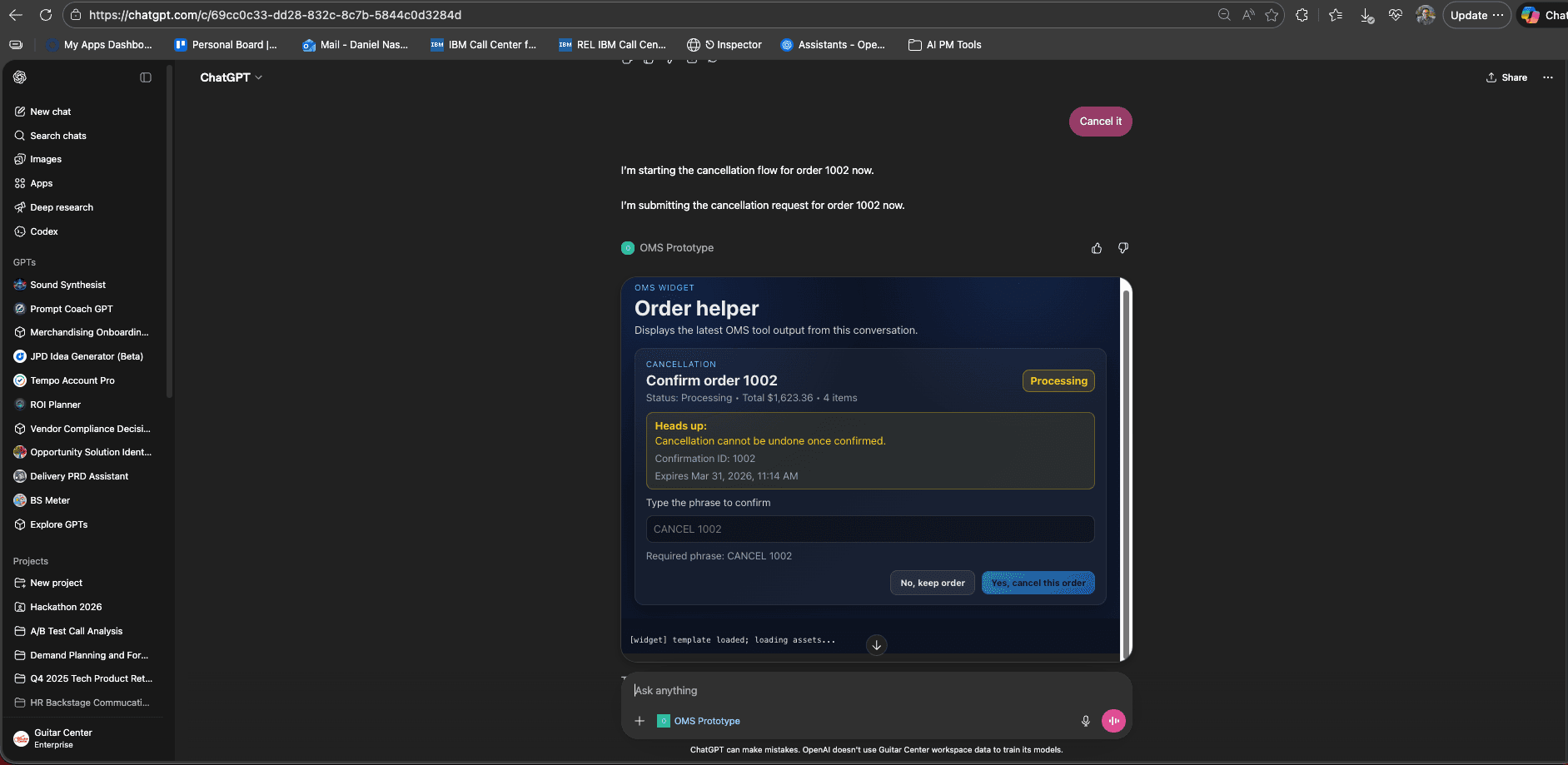
The confirmation state makes the risk explicit, requires a deliberate phrase, and keeps the user in control before submission.
03
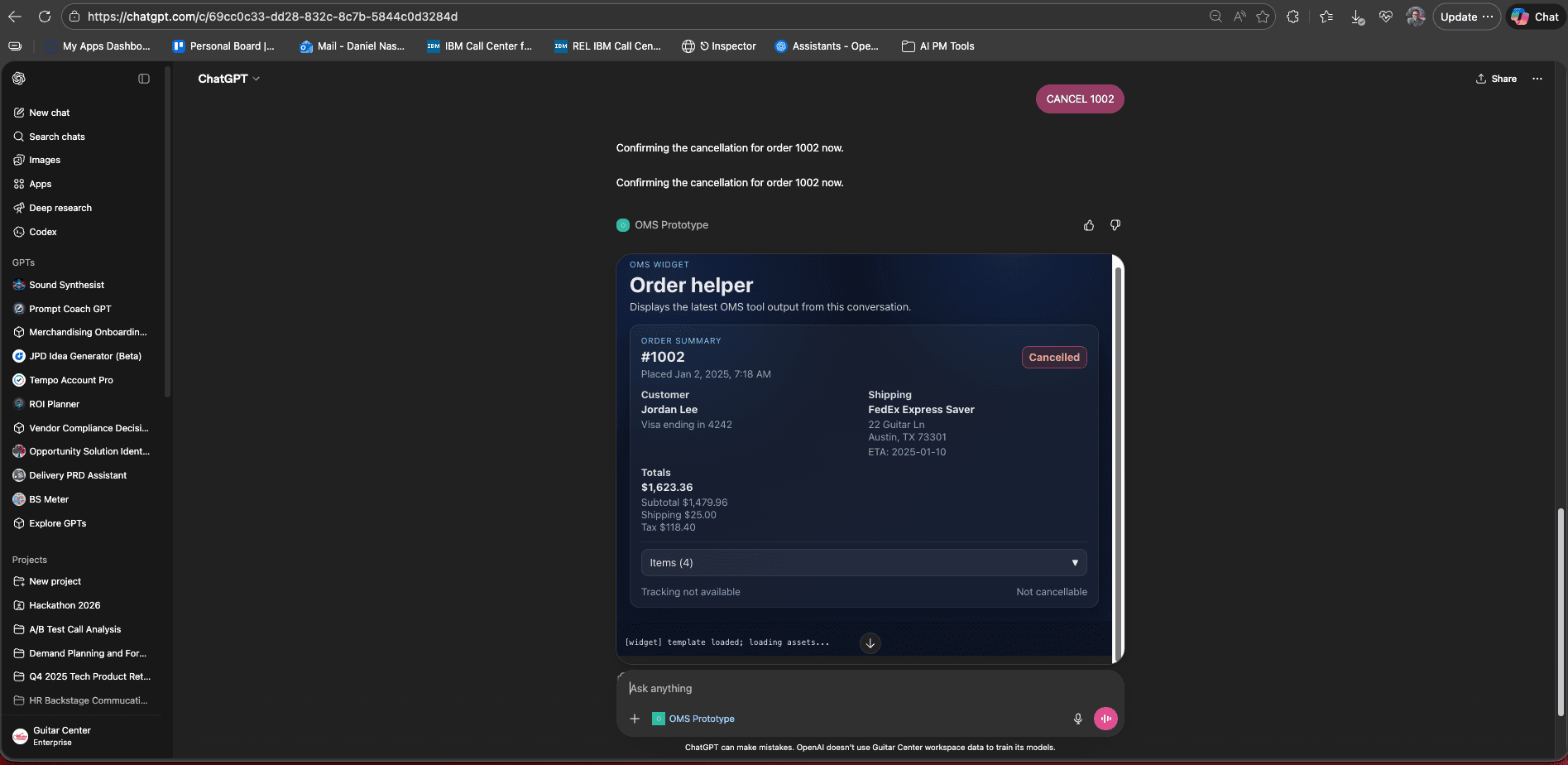
After confirmation, the assistant shows the updated order state clearly instead of hiding the result behind a generic success message.
Strategic takeaway
This prototype introduced a new interaction model: AI acting directly on internal systems through conversation.
It helped shift thinking from AI as a standalone tool toward AI as an active participant in real workflows. Framed carefully, it represented an early example of a new pattern for conversational interaction with internal systems.
Follow-on work
The prototype created alignment to move forward and explore production viability.
Builder signal
Scope note
Contact
This page is structured to make the prototype easy to discuss with recruiters, builders, and teams thinking about AI in real operating environments.