Prototype velocity
Built in ~10 hours
Time from blank repo to a working MVP built with AI-assisted coding.
Live Product
A focused AI-native product that helps artists turn the meaning behind a release into a cohesive six-week narrative.
Time from blank repo to a working MVP built with AI-assisted coding.
The product stays narrow and solves one painful job well: shaping a release into a coherent story.
A working version is available for real-world exploration and iteration.

Get a grounded read on responsibility, evidence, impact, or what to read next.
Prototype velocity
Time from blank repo to a working MVP built with AI-assisted coding.
Product stance
The product stays narrow and solves one painful job well: shaping a release into a coherent story.
Current status
A working version is available for real-world exploration and iteration.
The user pain or workflow friction this product is designed to address.
Independent artists do not just struggle with promotion. They struggle with telling a coherent story around a release. Most launches end up collapsing into a single post that says some version of "my new song is out," even when the work behind it carries weeks or months of meaning, process, emotion, and intent.
Turning that meaning into a structured campaign across multiple weeks and platforms is hard. The story gets spread across notes, reminders, half-finished captions, and last-minute decisions, which makes the campaign feel fragmented and reactive instead of intentional.
The result is familiar: engagement spikes around release day, then disappears quickly because nothing is holding the narrative together before or after the drop. Planning the story becomes a second job. The more time artists spend figuring out how to talk about their work, the less time they spend actually creating it.
How the product is intentionally scoped and framed.
LaunchMuse is intentionally narrow. It helps artists turn a release into a cohesive six-week story rather than asking them to stitch one together post by post.
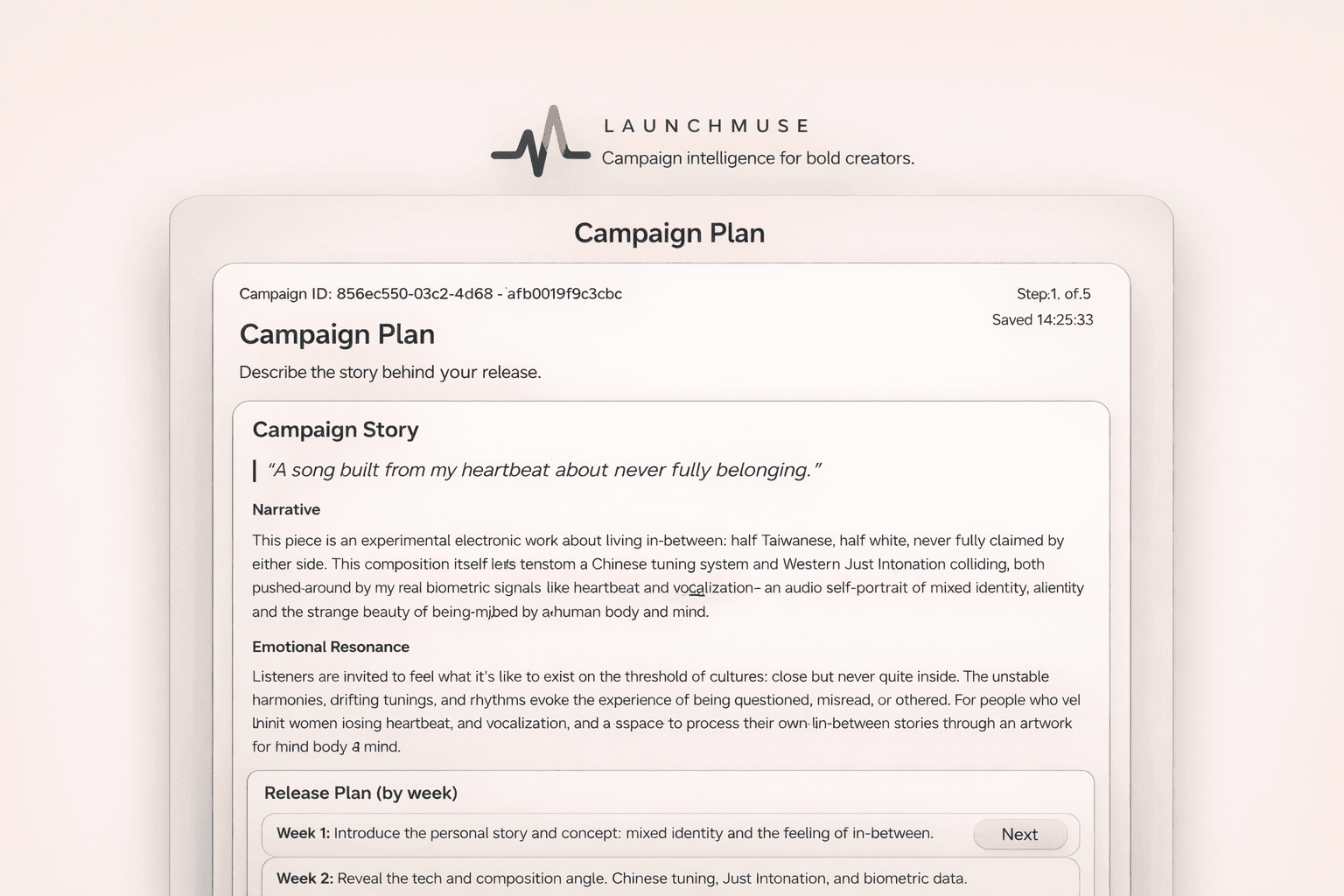
The product takes release context, then generates a structured campaign with narrative themes across each phase, timing across channels, and content ideas that reflect what the release is actually about.
This is not trying to be a full marketing suite. It acts more like a storytelling copilot that helps artists express the meaning behind their work without getting buried in planning overhead.
Why this product wedge matters beyond simple content planning.
Strong releases are not just announced. They are experienced. When the story around a release unfolds with some cohesion, fans have more ways to connect before the music arrives, not just after it is already out.
That changes the shape of engagement. Anticipation builds earlier, the work feels more meaningful and memorable, and the release stops feeling like an isolated post fighting for attention in a crowded feed.
LaunchMuse helps shift a release from scattered promotion into a connected narrative, while giving artists more time back for the work that matters most: making the music itself.
What the user actually does inside the product.
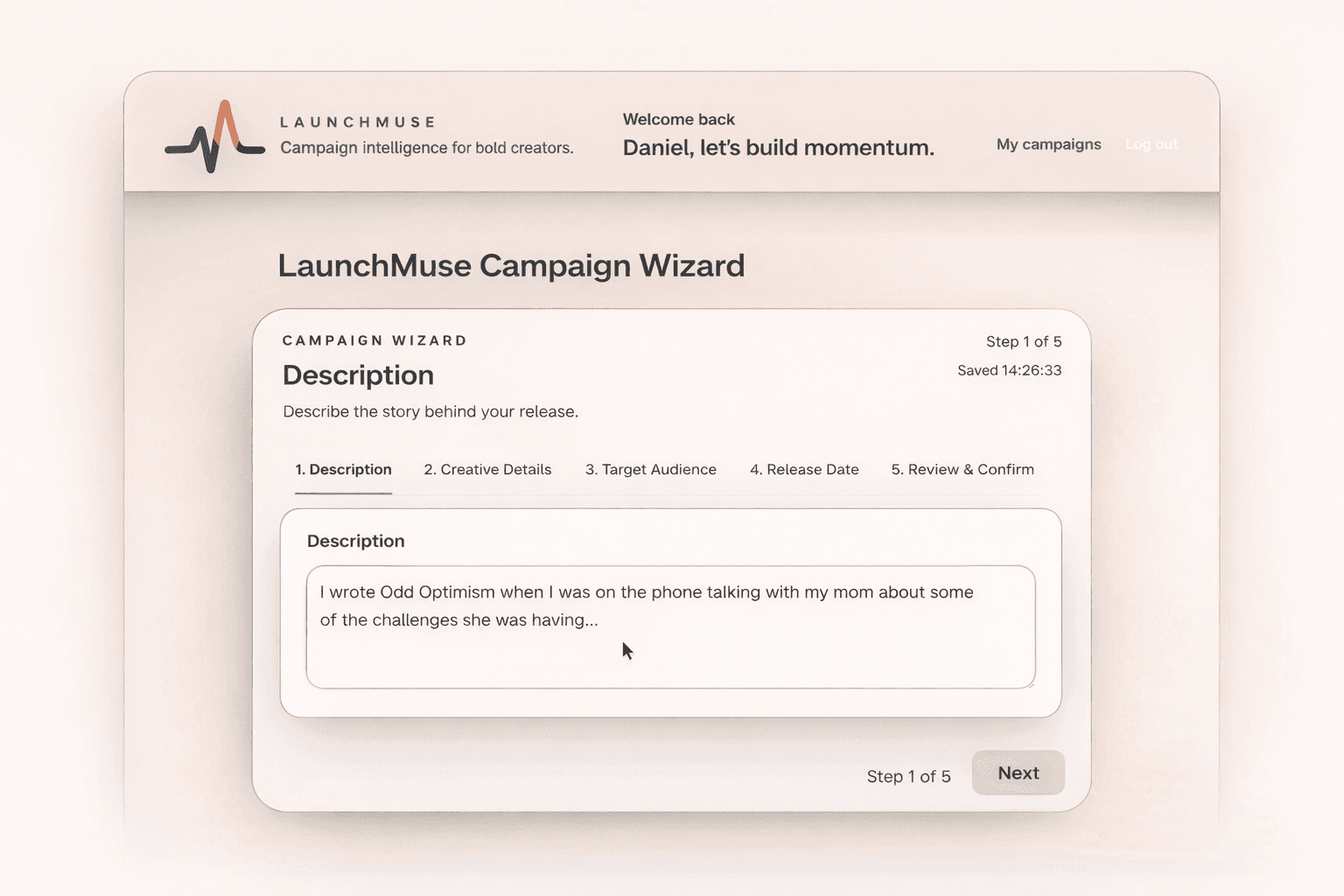
Artists describe the release timing, type, and story they want to tell.
LaunchMuse returns a six-week plan with story arcs, content themes, and timing across channels.
The artist can adapt, regenerate, or narrow the plan based on platform, tone, audience, or creative direction.
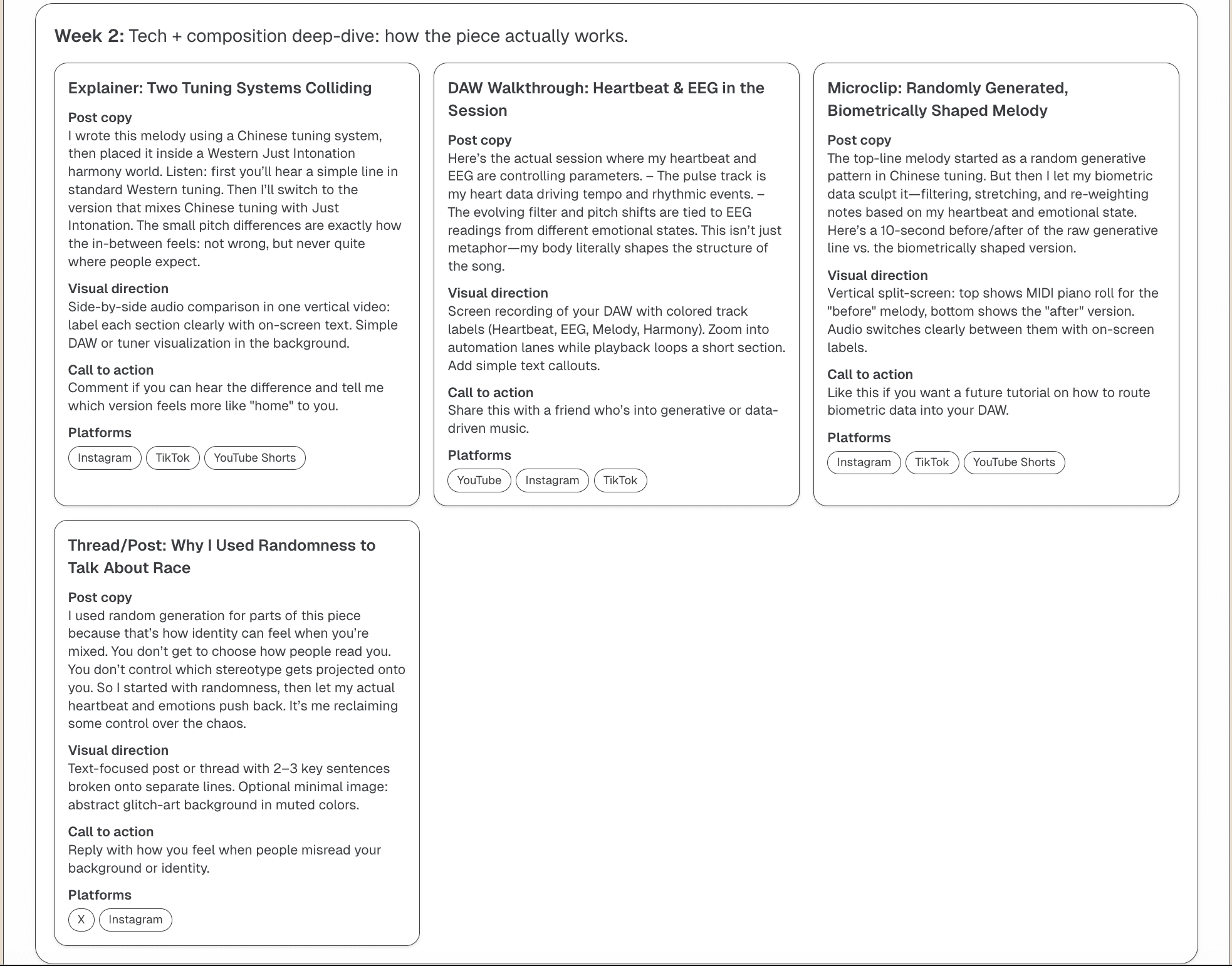
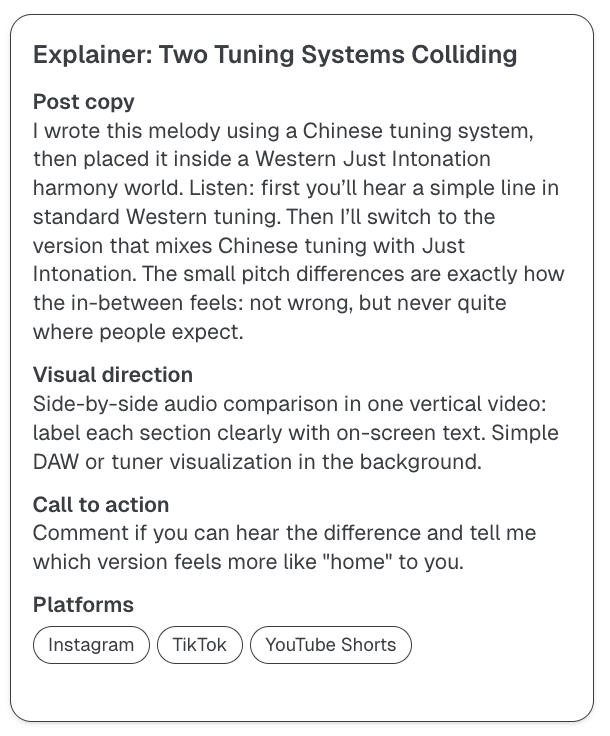
LaunchMuse generates structured, story-driven content across a full campaign timeline.


The product and leadership lessons this work reinforced.
How the product moved from concept to working MVP and why that matters.
LaunchMuse was developed as part of the Maven AI Product Management Bootcamp with Marily Nika, where there was also a pitching and contest component among participants. That context helped sharpen the product story early, but the stronger signal was how quickly the idea could be turned into something real.
The product evolved through multiple stages: it was first explored in v0, then iterated in Opal, and then built end to end in Codex. The full MVP came together in about 10 hours, alongside a first-time setup of the surrounding builder stack including GitHub, the Vercel environment, and the deployment workflow.
The significance is not simply that I learned new tools. It is that a PM can now move from concept to working product far faster than traditional workflows allowed, especially when the scope is sharp and the validation question is clear. This project reinforced that product leaders who can scope sharply and prototype quickly can validate ideas far earlier than traditional workflows allow.
Contact
These pages are intentionally structured so the product story is easy to discuss with recruiters, founders, or future teammates.